
In 1995, Portugal experienced a defining moment in its cultural history.
The discovery of the Côa Valley Rock Art – the largest known open-air collection of Palaeolithic art in the world – sparked a broad social, political, and cultural mobilisation, symbolised above all by the student movement and the musical adaptation “As Gravuras Não Sabem Nadar” (“The Engravings Can’t Swim”), in the name of preserving a unique and irreplaceable heritage. At stake was the construction of a dam that threatened to submerge thousands of engraved rocks dating back some 30,000 years.
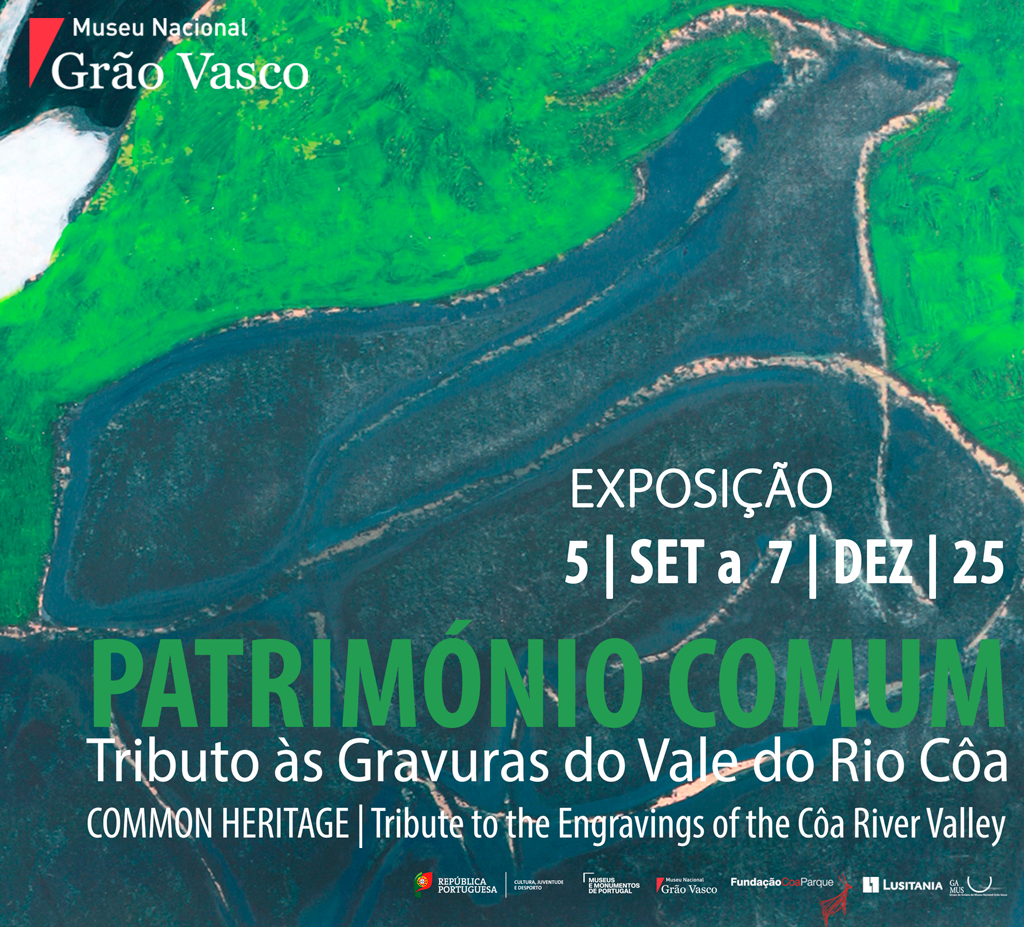
It was in this context that the Portuguese artistic community came together in exemplary fashion, contributing what it holds most precious: creation. In a collective gesture of great generosity and heritage awareness, renowned artists such as Ângelo de Sousa, Julião Sarmento, Mário Cesariny, Pedro Calapez, Ilda David, Pedro Cabrita Reis, Alberto Carneiro, Lourdes Castro, José Pedro Croft, among many others, donated their works to a fundraising auction in support of the cause to safeguard the Côa Valley engravings.
More than merely an artistic testimony of this unique struggle, this collection represents an act of solidarity – a commitment to the universal values of preservation, memory, and identity.
Today, the Côa Parque Foundation is the natural home of this collection and proudly embraces the responsibility of housing, valuing, and disseminating this body of work,